Category: Dog Tips

  • Tips to Keep Your Pets Happy As Summer Heats Up

    Photo Courtesy of Canva

    As June gets closer to July, which quickly turns into August, the temperatures are getting hotter and hotter. In fact, there are many days when it feels suffocating to step outside your home!

    Just as we have trouble in the heat, our pets can also. They can also get overheated and suffer from heat stroke. Just like it can be terrifying for us, it can be for them too. It can be deadly, so you need to be prepared to help your pets throughout these hot summer months!

    Here are some ways that you can help your pet this summer.

    Make sure that your pets have plenty of water. 

    Your pets need to drink plenty of water in order to cool down and stay hydrated. You may even want to add some ice cubes to your pet’s water to help keep him or her cool.

    Your dog may enjoy having a pool. 

    Just like we like to jump in the pool to cool down, there are many dogs who love splashing and playing around in a baby pool.

    This may help keep them cool, especially when they have been active outside. However, they may just enjoy it, even if they weren’t running around and playing. It can just be a nice way to cool off.

    Amazon offers many different doggie pools, like this one, to help keep your dogs as cool as possible this summer!

    Product Available on Amazon

    Do your best to keep your pets in the shade. 

    Lying around in the sun can be nice, but everyone needs a place where they can get out of it! If your backyard doesn’t have any shade trees, you may want to look into a dog house or shed where your pets can hide.

    If there aren’t many places to hide, make sure that you look under your vehicles before you leave. 

    Many animals will hide in the shade of a vehicle, and can get run over when their owners leave. For this reason, you need to look around before you drive off.

    Be careful with exercise. 

    On really hot days, you might not want to take your dog on his or her usual five-mile walk. That may be too much. You can take shorter walks instead. You may want to get up early before the day gets too hot, or wait until it is cooler in the evening. Some people may do a mile in the morning and one in the evening to still get their dog (and themselves) some exercise.

    Photo Courtesy of Canva

    When you do go out, make sure that you take plenty of breaks. 

    Don’t overdo it. If you or your dog needs to take a break, do so. Take along plenty of water so that both of you can stay hydrated while you are out. And if you need to stop early, please do so for the health and safety of you and your pet.

    Never leave your pets in a hot car. 

    It is way too hot to leave your pets in the hot car, even with the air conditioner running. It doesn’t take long for your car to get over one hundred degrees, which can really hurt your pet (if not kill him or her).

    Photo Courtesy of Canva

    The best way to keep your pets happy and healthy as the temperatures rise is to make sure that they have enough water. If you have a dog that loves to play outside, a kiddie pool may be the best. It is a good way for them to cool off after a good romp. You should also make sure that there is plenty of shade in your yard, so that they can get out of the sun if needed.

    ***

    Please note, this article contains affiliate links, where I will receive compensation if you buy the product, without any extra cost to you.

    ***

    You should also note that the information provided is for educational and informational purposes only. Although I am a veterinary professional, this blog should not be used as a substitute for professional veterinary advice.

    If your pet is experiencing a medical problem or concern, please contact a veterinary health professional immediately. 

  • Tips to Choose The Right Kennel For Your Pet

    Photo Courtesy of Canva

    As summer approaches quickly, more and more people are starting to plan their summer vacations. Many rush to different beaches where they can spend time lying in the sun and playing in the water. Others prefer to go to a remote cabin in the woods. Some people enjoy visiting amusement parks, while others prefer to explore different cities and cultures.

    Regardless of your plans, you will likely not be able to take your beloved pet with you. For this reason, you may be looking for the perfect kennel. Here are some tips to help you find one.

    Do your research. 

    Ask around to find out which kennels your friends have tried and liked. Don’t be afraid to ask your veterinarian. Many veterinarians receive recommendations from their clients about kennels, and they can pass them on.

    Photo Courtesy of Canva

    Start early. 

    Many of the good kennels fill up quickly, so you should book your kennel as soon as you book your vacation. In fact, you should be doing your research before you even do that!

    Many people prefer to use kennels that have both an indoor and an outdoor area. 

    This allows your pet to get plenty of exercise, no matter how busy the kennel is. If your dog is in a kennel all day and only gets a few short walks a day, he or she is going to be wound up when you get back home. This may be fine for a few days, but a week or more might be overwhelming for your dog, especially if he or she is really active.

    Will they let you visit the facility? 

    When visiting, you’ll want to take a look around and assess the cleanliness of the kennel. Though there are going to be times when multiple cages are getting cleaned at once, the kennels should be in good condition, one that you wouldn’t be afraid to take your dog.

    What about your dog? 

    Some kennels offer trial days, where you can board your dog at the kennel for a few hours to ensure they are comfortable with the place. That being said, if the kennel you want to use is too busy or full, you may not be able to try this.

    Photo Courtesy of Canva

    With various diseases that can spread rapidly throughout a kennel, it is essential to know which vaccinations are required. 

    At the very least, you will want to ensure that all dogs entering the facility have a valid Rabies vaccine and one that protects against Kennel Cough. The distemper shot, for both dogs and cats, is also a good idea.

    Don’t hesitate to ask kennel owners about any certifications and licenses that they may have. 

    Though all states are different, kennels may need to have different licenses to operate. Many kennels want to ensure they have the right employees and may require them to hold certifications in first aid, among other things.

    You may also want to know how many caretakers are on staff at any given time, along with the number of pets being boarded. 

    If there is just one person to take care of forty dogs, he or she will have their hands full. That being said, you shouldn’t expect kennels to be fully staffed at all times.

    You may want to consider meeting the caretakers before you take your dog to the kennel. 

    Though many kennels hire high schoolers to help with the extra load in the summer, you are going to want to make sure that there are plenty of adults around so that your dog is safe with the kennel.

    You should ask about what they will do in case of an emergency.

     You want to know if your kennel will take your pet to the veterinarian in case of an emergency. Although they may have one that they work with closely, you may also want to find out if they are comfortable taking your pet to the veterinarian that your pet is used to.

    You may also want to inquire about their policies regarding dogs that are stressed or nervous in a new environment. 

    What will your kennel do to make sure that your dog is more comfortable? Are they able to spend more time with pets that are pretty scared? Can they walk the dogs around for those who are too nervous to do much of anything? Will they make sure that your dog eats?

    Photo Courtesy of Canva

    Choosing a boarding kennel can be overwhelming, but when you find the right one, you can leave your dogs to go on vacation without worrying about them. For this reason, you need to take your time and ask around. Then, ask the kennel questions until you feel confident. You may even want to tour the facility and see if your dog can stay there for a few hours to make sure that he or she will do fine when you are away.

    ***

    Please note that the information provided is for educational and informational purposes only. Although I am a veterinary professional, this blog should not be used as a substitute for professional veterinary advice.

    If your pet is experiencing a medical problem or concern, please contact a veterinary health professional immediately. 

  • Tips to Make Camping With Your Dog Fun

    Photo Courtesy of Canva

    Spending quality time with your dog can be a great way to pass the time. In fact, you may even decide that you want to go hiking and camping with your dog.

    I recently wrote an article about hiking with your dog, to ensure that both you and your dog have a good time. If you haven’t had a chance to read it, you can check it out here.

    If you decide to take your dog camping with you, you need to plan ahead in order to make sure that the trip is a success for both of you. Here are some tips to help.

    Make sure that your dog is ready for the trip.

    Before you even think about traveling, you need to make sure that your dog can behave him or herself. Training is essential to make sure that everyone can have a good time.

    Getting a good physical is also helpful so that you know that your dog is healthy enough for a trip. Though anything can just “pop up,” you will make sure that your dog seems healthy for a trip.

    Pack enough things for your trip. 

    Though you may think that all you need is your dog before you go, the truth is that you need more than that.

    You are going to need to pack food and bowls. You shouldn’t forget water. Many dogs are used to the water in their home, and they may not drink other water as well as they do at home. If your dog is used to a lot of treats, you should bring them along as well.

    Amazon offers this all-in-one dog travel set, which includes two collapsible bowls, a water bottle, and even a treat bag, to make packing for your dog easy.

    Product Available on Amazon

    You also need to make sure that you have the right equipment. 

    You need a good, steady, and strong leash and harness or collar. You don’t want your leash to break when you are out and about.

    You may want to bring your dog’s bed so that he or she gets a good night’s sleep every night, as well as any toys that you may want. A tether to hook him or her up when you are just hanging around the campsite is also a good idea.

    It might be a good idea to take some extra special treats along. Though you wouldn’t want to try new treats while you are away camping, it is a good idea to find treats that are special for your dog, ones that will make him or her drop everything to get.

    Photo Courtesy of Canva

    And a crate.

    You are going to want to make sure that your dog has a place where he or she is safe. Just like at home, your dog needs to know that he or she has a place all of his or her own. If your dog wants to be left alone, he or she has a place to do so.

    Then, you need to make sure that you plan ahead. 

    You need to make sure that you can take your pet wherever you go. This includes making sure that the campground allows dogs. You should read up on any rules that are in place, such as leash laws and other things.

    You also need to take care when you are planning. You may need to add in a few rest stops to ensure that your dog has time to go to the bathroom and get some extra energy out when you are on a long trip.

    This may include the weather. You should make sure that you are prepared, no matter what the weather brings. You may want to bring extra water along if it is going to be really hot. If they are calling for storms, you might want to plan some extra inside activities. You should also bring extra towels to dry your dog off before he or she heads in!

    Photo Courtesy of Canva

    Though your dog may be well-behaved at home, you shouldn’t expect that in a strange environment. 

    This doesn’t mean that you should expect the worst. You just need to make sure that you keep a good eye on your dog at all times.

    This includes watching out for other dogs. Camping sites where dogs are allowed may be filled with other dogs. Your dog may be good around other dogs, but those may not be. It is often better to keep your distance, either way.

    Dogo App

    If your dog needs some extra training before you venture out, you may want to check out Dogo’s tailored training programs. After taking a survey, you will receive a customized training plan for you and your dog. They also offer courses for your new dog, no biting, potty training, basic obedience, tricks, and more! 

    It is a good idea to have a first-aid kit along when you travel. 

    This should also include your dog’s vaccine records, just in case the campsite requires it. You may also want to bring some gauze and elastic bandages in case your dog gets cut. It may be a good idea to know the closest animal emergency hospital in case you need it. You don’t want to be stuck in an emergency, without knowing where to turn.

    Amazon has many first-aid kits for dogs, like this one, that you may want to check out. It will even work well at home or in your car!

    Product Available on Amazon

    Camping with your dog can be loads of fun, if he or she is ready. You want to make sure that he or she is well-trained and can get along with others. If your dog gets car sick, it might be easier to leave him or her at home!

    You also need to make sure that you take everything that you need, including bowls and water. Don’t forget special treats, and make sure that you bring his or her crate along. You may even want to have a first-aid kit, just in case!

    ***

    Please note, this article contains affiliate links, where I will receive compensation if you buy the product, without any extra cost to you.

    ***

    You should also note that the information provided is for educational and informational purposes only. Although I am a veterinary professional, this blog should not be used as a substitute for professional veterinary advice.

    If your pet is experiencing a medical problem or concern, please contact a veterinary health professional immediately. 

  • Tips to Hike Safely with Your Dog

    Photo Courtesy of Canva

    There is no bad time to get out and explore the world (or at least take some hikes around your home). Many people love hiking in the spring, because they enjoy getting out after a long winter. Others prefer the summer because they have plenty of extra time to explore. Then, there are others who enjoy spending time out in nature when the temperatures start to cool off. They also enjoy watching the leaves change color in the fall. 

    What could be better than taking our beloved dog along for the hike? Nothing, really, unless you are not prepared. Here are some tips to make sure that you have a safe hike with your dog.

    Make sure that your dog is ready for it. 

    It is important that you take into consideration the health of your dog. Does your dog love to run and play outside for hours? Then, a hike may be fun for both of you.

    Your puppy or older dog may not be able to go for miles! The puppy may not have enough endurance, and your older dog may have some arthritis, which may be holding him or her back. Your smaller dog may struggle with a long walk, especially if you are a fast walker. Shorter walks on flat surfaces may be fine for puppies, older dogs, and small dogs.

    Make sure that your dog is well-trained before heading out on a hike. 

    Your dog needs to know some basic commands while out on the trail. At the very least, your dog should know how to stop, stay, and come.

    Dogo App

    If your dog needs some extra training before you venture out, you may want to check out Dogo’s tailored training programs. After taking a survey, you will receive a customized training plan for you and your dog. They also offer courses for your new dog, no biting, potty training, basic obedience, tricks, and more! 

    Then, don’t forget to plan where you are going. 

    You should never just decide to go for a hike with (or without) your dog. Instead, you should have a plan, along with a map of the route that you are taking.

    While doing this, you will be able to find out if you and your dog are in good enough shape to complete the route. You may want to talk to others who have traveled that way, to make sure that the footing is good. They may also be able to tell you about things that you need to look out for.

    Photo Courtesy of Canva

    On the day of your hike, you should check the local weather reports to make sure that you will have good weather that day. 

    If they are calling for rain, you may want to stick to a shorter hike if you decide that you want to head out anyway.

    Always, always, always let someone know where you are going. 

    Though you may not be a child telling your parents where you are going, the truth is that it is a good idea to let someone know your plan. That way, if you don’t come home when you are supposed to, someone will know to come looking for you.

    Take enough supplies along. 

    You should bring water and snacks on every hike that you take. This also goes for your dog. He or she is going to need water to keep going, too. You can’t just assume that your dog will find water in the creeks and streams where you are going. Not all of these water sources are safe for your dog to drink from.

    You also need to carry a bowl around for him or her to drink out of. Lucky for you, they make collapsible bowls that you can easily carry on your hikes.

    Amazon offers this all-in-one dog travel set, which includes two collapsible bowls, a water bottle, and even a treat bag, to keep your dog happy on the trail all day long!

    Product Available on Amazon

    Make sure that your dog is protected against fleas and ticks before heading out. 

    The truth is that your dog should be protected all year long against these nasty critters. That being said, many people don’t give the preventative during the fall and winter. However, the fall can be the worst time for fleas and ticks, because they are looking for a warm place to live.

    You and your dog could get infected with a disease carried by ticks, such as Lyme disease. Flea bites can cause a lot of problems, including itchy and sensitive skin.

    I recently wrote an article about why you should keep your dog on heartworm, flea, and tick prevention year-round. If you haven’t had a chance to read it, you can check it out right here.

    Photo Courtesy of Canva

    Hiking can be a great way to spend some time with your dog. However, if you aren’t careful, it can turn into a nightmare. You need to make sure that both you and your dog are in good enough shape to get through the hike. Training is also a necessity, so that you can keep your dog under control at all times. You also want to make sure that you plan your trip, take plenty of supplies (including a water bowl), and let someone know where you are going!

    ***

    Please note, this article contains affiliate links, where I will receive compensation if you buy the product, without any extra cost to you.

    ***

    You should also note that the information provided is for educational and informational purposes only. Although I am a veterinary professional, this blog should not be used as a substitute for professional veterinary advice. 

    If your pet is experiencing a medical problem or concern, please contact a veterinary health professional immediately. 

  • Why Does My Dog Need to Be on Heartworm and Flea/Tick Medications All Year Round

    Photo Courtesy of Canva

    One of the most common questions that I get asked as a veterinary technician is why we recommend that their dogs be on heartworm and flea/tick medications all year-round. Everyone sees the cost of the medications and wants to try to save money. Others don’t want to give their dogs anything more than they need.

    However, skipping these medications can be a mistake. Here are some reasons why you should keep your dog on heartworm and flea/tick medications all the time.

    Fleas can be a problem, no matter what the season is. 

    Though many people think that fleas go away in the fall and winter, the truth is that the fall is usually when they are at their worst. They are doing everything they can to find a warm place to survive the winter, and we see fleas regularly during the fall and winter months.

    Even worse, many dogs and cats have a severe allergy to fleas. Even one flea can set off a reaction that leaves them absolutely miserable! They itch, scratch, and bite themselves all day long, even after the flea has jumped off!

    Ticks can also be a problem all year round. 

    Ticks can live outside until the ground freezes. This means that they are also looking for somewhere safe to live. They hide in tall grass and bushes, attaching to any dog (or person) that walks by.

    Photo Courtesy of Canva

    Even worse, if your dog has a tick attached for more than thirty-six hours, he or she may get a disease transmitted by the tick. Most people think of Lyme disease, but there are many others out there. These diseases can become crippling if not caught early.

    If you take your dog off heartworm medication, you must test him or her every year before starting back up on it. 

    This will ensure that your dog doesn’t get the disease in the few months that he or she wasn’t on the preventative. If you give a heartworm-positive dog heartworm preventative, the results can be deadly!

    Heartworm disease can kill your dog. 

    If your dog gets heartworm disease, it means that he or she has worms that live in the heart. These worms can cause a lot of damage to your dog’s heart and lungs.

    Even worse, the treatment can be fatal. Though you need to kill off the worms in your dog’s heart, you can’t do it too fast. If too many worms die quickly, it can be deadly for your dog. This is another reason why you can’t give preventative to dogs who have heartworms!

    Most heartworm preventatives also protect your pet (and your family) from intestinal parasites. 

    Your pet probably comes into contact with many intestinal parasites during his or her lifetime. These include tapeworms, hookworms, roundworms, and others.

    Photo Courtesy of Canva

    Worms can cause diarrhea and vomiting in your pet. You may also notice weight loss. If you give your pet preventative, it will help keep him or her parasite-free!

    And though you think that preventative care is expensive, the truth is that it is much more costly to treat! 

    If your pet gets heartworms, you will be dealing with multiple treatments, which can be fatal to your pet.

    If your pet brings in fleas, you may have to treat every one of your pets in the household, along with the house. Even worse, it can take up to three months to eradicate fleas once they get inside your home!

    Then, your pet may be facing tick-borne diseases. He or she may need to be on antibiotics for a month or longer. And once your pet gets Lyme or another disease spread by ticks, he or she is more likely to get it again. You can also get them.

    Photo Courtesy of Canva

    Though you may not want to spend the money (or give your dog more medication than he or she needs), the truth is that it is better to give preventatives all year long! With the weather changes, we see fleas and ticks all year. They are really bad in the fall as they start to look for warm places to live. Even better, these preventatives will take care of any intestinal parasites that your pet may have, which will help to keep your family healthy!

    ***

    Please note that the information provided is for educational and informational purposes only. Although I am a veterinary professional, this blog should not be used as a substitute for professional veterinary advice. 

    If your pet is experiencing a medical problem or concern, please contact a veterinary health professional immediately. 

  • Tips For Traveling With Your Dog

    Photo Courtesy of Canva

    Many people love their dogs and spend as much time with them as they can. This includes vacations. They enjoy sharing their new experiences with them. However, traveling with a dog can be a little stressful. With some careful planning, you can make your life work with pets.

    Here are some tips to make traveling with your dog.

    Make sure that your dog has a collar with identification on it.

    Your name and phone number should be on the collar so that, if your dog gets lost, you are able to get him back. You can also go a step further and get him a microchip. This ensures that your dog will be brought back to you.

    Photo Off of Amazon Website

    Amazon sells these amazing customizable collars, which will help you get your pet back, in case he or she gets away.

    Pack appropriately for your dog.

    Make sure that you bring his or her bed, bowls, and food. Many dogs enjoy their familiar toys when they are on a road trip. Anything that reminds your dog of home is good to take along.

    Don’t forget that some water can taste different, so it might be a good idea to bring some water from home to ensure that your dog gets enough to drink while you are away.

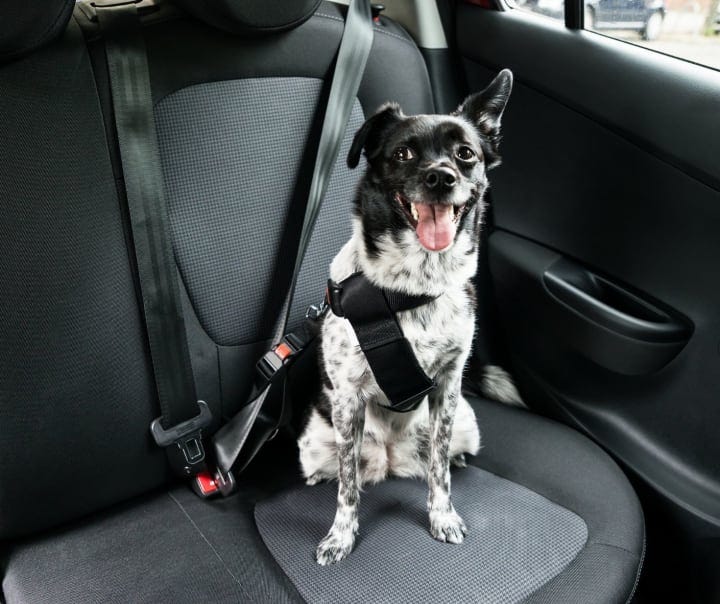
    Use carriers or seat belt restraints when traveling by car.

    Putting your dog in the back of the pickup truck is not a safe option when traveling. Many dogs jump (or fall out) and get hurt. Sometimes this causes death.

    Photo Courtesy of Canva

    Instead, put them in a carrier, so they can move around and still be safe. If you have a bigger dog, you should get a seat belt restraint. Both of these things will keep your dog safe if you are in an accident.

    Product Courtesy of Amazon

    Amazon has this great product, with two leashes that buckle into your seat belt, as well as a collapsible water bowl.

    Do a few practice car rides to see how your dog will handle a long car ride.

    Dogs can get car sick, too. They can also get anxious and really wound up in the car. Prepare for this by taking them on several short rides to see how they will react. You may have to talk to your veterinarian about getting a sedative to make the car ride a little less stressful.

    Make sure that you take a lot of breaks.

    Though many people love to rush to their destination, it is not possible with dogs. They need to take frequent bathroom breaks. Taking short walks every few hours is a good idea so that they can stretch their legs and get something to drink.

    Before you even leave for your destination (or sooner than that), make sure that your dog can stay with you at the hotel or bed and breakfast.

    Not all hotels and bed and breakfasts are dog-friendly. You need to make sure that you can find places where you can take your dog. You can’t leave him in the car overnight.

    Photo Courtesy of Canva

    Taking your dog along on vacation is a great idea, with plenty of planning. Make sure that your dog has a collar and identification. If possible, get him microchipped so, even if he gets lost, you will be able to find him. Make sure you plan ahead with where you are staying and pack appropriately. Be sure to bring his bedding, bowls, food, and water.

    Travel safely in the car with either a crate or a seat belt restraint. It might be a good idea to take a few trips around town to see how your dog reacts in the car. While on the road, be sure to take plenty of breaks and walks to keep both you and your dog limber on the long drive. With all of these tips, you should have a wonderful vacation with your furry friend.

    Product Courtesy of Amazon

    Amazon offers this all-in-one dog travel set, which is the perfect place for you to start traveling with your dog!

    ***

    Please note, this article contains affiliate links, where I will receive compensation if you buy the product, without any extra cost to you.

    ***

    It is also important to know that the information provided is for educational and informational purposes only. Although I am a veterinary professional, this blog should not be used as a substitute for professional veterinary advice. 

    If your pet is experiencing a medical problem or concern, please contact a veterinary health professional immediately.