Category: Pet Owner Concerns

  • Reasons to Adopt Your Next Pet!

    Photo Courtesy of Canva

    Adding a new furry family member is a significant decision. While many people believe that rescuing a dog is the way to go, just as many people go to breeders and pet shops when it is time to get their next dog.

    Many people are seeking a specific breed of dog, believing they can only obtain one through a breeder. Others want a puppy, instead of an older dog, so that it can grow up with their children.

    However, the truth is that dogs of all ages are looking for a forever home and are often in need of rescue. The same can be said about the breed. Dogs of all breeds (purebred and mutts) need homes. There are local SPCA’s and Animal Rescues overflowing with dogs. There are also breed-specific rescues available if you prefer to adopt a specific breed.

    There are so many reasons that you need to get a rescue dog today!

    Getting a rescue dog saves their lives! 

    Many dogs are euthanized each year because shelters and rescues are overflowing with dogs. Often, there is nothing wrong with the dogs other than the fact that nobody wants them. So, save a dog today!

    Photo Courtesy of Canva

    When you rescue a dog, you are not supporting puppy mills. 

    Puppy mills contribute to the problem of dog overpopulation. Buying puppies only encourages breeders to breed their dogs more, so they can produce more puppies and earn more money. By rescuing your next dog, you are saving one without supporting breeders.

    Unless you get a puppy, you do not have to deal with the puppy stage. 

    You might get a dog that is already socialized and potty-trained. They might already be used to children of all ages. Many of the dogs have basic manners when you receive them, depending on how the previous owner treated them. You may find yourself with a perfect, well-trained dog!

    Photo Courtesy of Canva

    Training can go a little easier, especially when it has already begun. 

    If someone has already started training, it makes the whole process a little easier. Potty training and leash walking might be within reach (and soon)! Some even come to you already going outside when they need to go to the bathroom.

    ***

    If you want to unleash your rescue dog’s potential, you may want to check out Dogo’s tailored training programs. After taking a survey, you will receive a customized training plan for you and your dog. They also offer courses for your new dog, no biting, potty training, basic obedience, tricks, and more! 

    ***

    Rescue dogs are cheaper than puppies. 

    Even with cheaper fees than purebred puppies, rescue dogs are often spayed or neutered. They are usually up-to-date on their vaccines, which also saves you some money on vet bills.

    When you get a puppy, you have to sign up for several vet visits to make sure that your new dog is up-to-date on all of his or her shots. Then, you need to spay or neuter him or her, which could cost you a few hundred dollars.

    ***

    Looking to get pet insurance for your new rescue pet, The Swiftest has helped over 100,000 cat owners find the perfect insurance for their cats. They also have a list of the best insurance options for families with both dogs and cats. If you are looking for the best insurance companies for your pets this month, check out this list by The Swiftest. 

    ***

    Rescue dogs often form strong bonds with their new owners. 

    Often, neglected dogs are so overjoyed at finding a home and people who love them that they attach to them quickly. They typically love to follow them around and spend time with them. They can make the best and happiest pets!

    Often, unless you get a puppy, you will know what kind of personality your dog has. 

    With puppies, you can’t guarantee what your adult dog will act like. Instead, when you rescue an older dog, he already has a personality and way of behaving. You can decide precisely what you want in a dog and find one that matches your needs.

    Photo Courtesy of Canva

    Rescuing a dog can be beneficial for many reasons. You can decide what traits you want in a dog and find one that matches them. You do not have to deal with the messy puppy stage (unless you want one)! The dogs will also come to you fully vaccinated and fixed. They will have some basic training and socialization.

    ***

    Please note, this article contains affiliate links, where I will receive compensation if you buy the product, without any extra cost to you.

    ***

    Please note that the information provided is for educational and informational purposes only. Although I am a veterinary professional, this blog should not be used as a substitute for professional veterinary advice.

    If your pet is experiencing a medical problem or concern, please contact a veterinary health professional immediately.

  • How to Gently Stop Your Dog From Barking So Much

    Photo Courtesy of Canva

    We love our dogs, but the nonstop barking? Not so much. Whether they’re sounding the alarm at every passing car, barking at the wind, or just won’t stop when the doorbell rings, it can get frustrating fast. Not to mention, the neighbors probably aren’t thrilled either.

    If your dog is a bit too vocal, the good news is there are some helpful tools out there that can make a big difference without being harsh or uncomfortable. Here are three pet-parent-friendly options that can help bring some peace and quiet back to your home:

    Anti-Bark Training Devices (No Shock!)
    There are some great no-shock bark deterrents that use sound, vibration, or citronella spray to gently discourage barking. Many are automatic and activate only when your dog barks, helping them learn that they need to be quiet. Just make sure to look for ones that are humane, adjustable, and vet-approved.

    Product Available on Amazon

    Calming Chews or Supplements
    If your dog barks because they’re anxious or easily overstimulated, calming treats might help. They’re made with natural ingredients like chamomile, L-theanine, or melatonin, and can take the edge off without making your dog drowsy. They’re especially handy during high-trigger times like thunderstorms, fireworks, or visitors.

    Product Available on Amazon

    Interactive Toys or Puzzles

    Product Available on Amazon

    Bored dogs bark more—plain and simple. A mentally stimulating toy can keep your dog engaged and less focused on barking at every little thing. Puzzle feeders, treat-dispensing balls, or even a long-lasting chew can work wonders to redirect their energy.

    Product Available on Amazon

    There’s no one-size-fits-all fix when it comes to barking, but trying a mix of tools and training can really help tone things down. Start with one of these suggestions and see what works for your pup—and your sanity.

    ***

    Please note, this article contains affiliate links, where I will receive compensation if you buy the product, without any extra cost to you.

    ***

    You should also note that the information provided is for educational and informational purposes only. Although I am a veterinary professional, this blog should not be used as a substitute for professional veterinary advice. 

    If your pet is experiencing a medical problem or concern, please contact a veterinary health professional immediately. 

  • Are You Struggling With the Loss of Your Pet?

    Photo Courtesy of Canva

    Whether you have made the decision to put your pet to sleep or he or she died suddenly while sleeping, getting over the death of a pet is never easy. It doesn’t even matter if you had him or her for five years or fifteen. You (and your family) need time to grieve.

    Still struggling? Here are some tips that may help you cope with your loss.

    Give yourself plenty of time. 

    Grief isn’t something that happens overnight. In fact, it can take months for some. It can also hit you like a ton of bricks once in a while, meaning that you may never get over your loss.

    For this reason, you need to give yourself time to grieve and to feel the pain. If it takes you longer than most, that is how you cope. There is nothing wrong with that. Take all the time you need to process your feelings.

    Don’t be afraid to show your emotions. 

    You will likely experience a range of emotions, from anger to sadness. You may face feelings of depression and may be asking if you did the right thing (if you had to make the decision to put your pet to sleep).

    Don’t be afraid to talk about your feelings. You don’t want to bottle them up, because this will only exacerbate the problem in the future.

    Don’t forget about your other pets. 

    Just because you lost one of your pets doesn’t mean that you can forget about your other ones. In fact, many of them may also be grieving!

    Pto Courtesy of Canva

    You need to ensure that you spend plenty of time with them, giving them extra love and attention during this challenging time. They are going to need you as much as you need them while you are working your way through your grief!

    Find a way to say goodbye. 

    Unlike people, we don’t hold a funeral or memorial services to help us say goodbye to those we love. However, if you think it would help, you may want to do something for your pet. Invite your friends and family over to spend a few hours remembering your beloved pet.

    Don’t forget to move on. 

    Many people struggle to move on after their pet dies. They almost get stuck in their grief, which can be very detrimental to their lives. You need to find a way to move on with your life.

    It may also be helpful to consult a professional. 

    Many people have no problem seeing a therapist if they lose someone who is very dear to them. However, doing the same when their pet dies may seem a little silly. That being said, it is much better to talk to someone, so that you don’t get stuck in your grief!

    Photo Courtesy of Canva

    When you lose your pet, it takes time to deal with your grief. However, if you don’t deal with it, you may find yourself struggling years later. You are allowed to feel everything that you do, from anger and sadness to utter depression.

    That being said, you can’t forget about your other pets. They are likely to be going through the stages of grief also. Make sure to spend extra time with them, as they will also find ways to move on without their best friend.

    You may also want to spend some time with your family and friends thinking about your beloved pet. They may miss your pet as much as you do, so this may help all of you say goodbye.

    You should also not be afraid to seek help if you need it. You might not think anything of seeing a therapist if someone you loved died, but you may not want to do the same when your pet dies. However, it may really help you find a way to move on, while still remembering your beloved pet.

    ***

    Please note that the information provided is for educational and informational purposes only. Although I am a veterinary professional, this blog should not be used as a substitute for professional veterinary advice.

    If your pet is experiencing a medical problem or concern, please contact a veterinary health professional immediately. 

  • You Made the Decision, Now What?

    Photo Courtesy of Canva

    If your pet is older, you may be starting to face the reality that they aren’t getting any younger. You may even be facing the realization that your pet has a disease that isn’t going to get better. He or she may not be living the best life anymore, and you may be considering making a decision.

    Once you decide to euthanize your pet, you may be wondering what happens next. There may be some things you need to consider as well.

    Are you already facing the decision? Here are some tips to help you through the euthanasia process.

    It is important to make the decision and stick to it. 

    Many pets seem to have a really good day, as soon as you decide that it is time to put him or her to sleep. Let your pet enjoy that day, but don’t put it off too long. He or she may get even worse when the good day ends.

    If you’re struggling with the decision, you may want to read my article, ‘Is It Time to Say Goodbye.’ If you want to check it out, you can read it right here

    Figure out what you want to do with your pet’s body. 

    Not only do you need to make the decision, but you also need to determine what to do next. Burying your pet in your backyard may not be an option for you, depending on your life situation, so most clinics offer cremation services.

    You may choose to get your pet’s ashes back, though you may also decide not to. This may come down to cost; however, you may also need to decide what to do with your pet’s ashes. Do you want to share them with someone or keep them with you safely?

    Let everyone say goodbye. 

    You want to make sure that everyone gets a chance to say goodbye before you go to the veterinarian’s office. Some of your family and friends may want a chance to come over and say goodbye before it happens.

    Decide who needs to be there. 

    At the veterinarian’s office, we see it all. There are some pets who only have me by their side during the process, while others bring their whole families. You have to decide who you want in the room when your pet goes to sleep.

    If you are single, you may not want to be alone. Don’t be afraid to ask a family member or friend to go with you. If you have a spouse, he or she may also want to be there, even if your spouse has to take off work. If you have children, you may need to decide whether you want them to be there or not.

    Our veterinarian uses a sedative prior to giving the euthanasia solution. 

    This allows the pet to fully relax before administering the medication to put them to sleep. Some people only stay until their pet is sleeping before they leave. Many people with children allow them to be present until it is time to give the actual medication.

    Photo Courtesy of Canva

    Making the decision to end your pet’s suffering can be very difficult. You may want to have a frank conversation with your veterinarian to see where everything stands. He or she may be able to give you some more time with your pet or help you come to the realization that it may be time.

    Then, you need to give yourself time to say goodbye. Don’t forget to consider any family or friends who may also want to spend some time with your pet. You may also have to decide who you want to be with you. Many people have to think long and hard about whether they want their children around. This is a very personal decision, and shouldn’t be taken lightly. It may also depend on your children. Some may want to be there, while others may not.

    ***

    Please note that the information provided is for educational and informational purposes only. Although I am a veterinary professional, this blog should not be used as a substitute for professional veterinary advice.

    If your pet is experiencing a medical problem or concern, please contact a veterinary health professional immediately. 

  • How Do Pets In Your Bed Affect Your Sleep?

    Photo Courtesy of Canva

    Many people in America sleep with their pets in their beds. Sometimes, they feel like they are a part of the family and deserve a spot on the bed. Other times, they cannot get their pets to get out of bed.

    Either way, how do pets in your bed affect your sleep?

    Many people have allergies that might keep them awake at night. 

    You may not be able to sleep as well because you can’t breathe as well with them beside you.

    Pets are just like people. 

    They can move around, snore, kick you, and basically keep you awake all night. Just like your husband or wife, you may find yourself waking up every time that your pet moves.

    Cats are nocturnal, and they tend to be active at night. 

    They might keep you up while they are pacing around the bedroom looking for something to get. You may hear them running around the house when you should be getting some sleep.

    Photo Courtesy of Canva

    That being said, some people feel better having their pets in bed with them. 

    They might feel safer at night with their pet beside them. This may be even more true if they are home alone at night.

    Even if you want to get your cats off your bed, you might not be able to. 

    They are very territorial and may not appreciate being moved off your bed. They might hiss, scream, and bite. You have to be careful of cats that try to scratch you because they can give you cat scratch fever.

    Before letting your pets sleep in bed with you, ensure they are healthy. 

    Pets can pass on diseases such as roundworms, intestinal worms, and much more. You definitely need to take good care of your pets to let them sleep in your bed.

    While a pet in your bed may or may not disturb you, it is up to you whether they are allowed in your bed. 

    It may be a personal reason, though it may also be practical. Only you can make the right decision for you and your pet.

    If you decide to sleep beside your pets, here are some tips to ensure that you both get a good night’s sleep every night.

    Photo Courtesy of Canva

    Take your pets to the veterinarian regularly for checkups and deworming. 

    You don’t need to get sick just because you sleep with your pet.

    Work on training your pet to sleep beside you, not on your chest, head, or any other area. 

    You don’t want to get woken up feeling like you can’t breathe, simply because they are sleeping on your neck or chest. They can safely stay beside you all night long.

    Be sure to get a good mattress protector that will help you against bacteria that grow on your mattress. 

    If you have allergies, you may also want to consider finding one that is specifically designed for allergy sufferers.

    Product Available on Amazon

    Amazon has many different mattress protectors, such as the one shown above, that can help you protect your mattress (and your allergies)!

    Whether you allow your pets to sleep with you is a decision you need to make for yourself. For some people, their pets are disturbing their rest due to their snoring and roaming. However, some pets will sleep quietly beside you all night long. Some even get mad if you interrupt their sleep! Others may get mad when you try to get them off your bed.

    If you decide to let your pets sleep beside you in bed, be sure to take them to the veterinarian regularly. You want to keep your fur babies healthy, as well as your entire family.

    Photo from SweetNight

    SweetNight offers innovative yet affordable sleep products, including award-winning mattresses, toppers, pillows, and even elevated cooling dog beds (for those who DON’T want to sleep with their dogs). They offer free shipping and returns, a risk-free 100-night trial, and a warranty of up to 10 years.

    ***

    Please note, this article contains affiliate links, where I will receive compensation if you buy the product, without any extra cost to you.

    ***

    You should also note that the information provided is for educational and informational purposes only. Although I am a veterinary professional, this blog should not be used as a substitute for professional veterinary advice. 

    If your pet is experiencing a medical problem or concern, please contact a veterinary health professional immediately. 

  • Is It Time to Say Goodbye?

    Photo Courtesy of Canva

    As pet parents, we want the best for our beloved pets. You want them to live their best life. You may also want your pet to live forever. That being said, we all know that eventually we are going to have to say goodbye to our beloved pet.

    Even worse, you may be waiting for your pet to go on his or her own, only to have to make the decision to put him or her to sleep. It can be a very hard decision to make, and one that shouldn’t be made lightly.

    Unsure about what to do? Here are some things to consider when determining if it is the right time to put your pet to sleep.

    Does your pet have a terminal illness? 

    If your pet has a terminal illness, and you don’t feel like he or she has a good quality of life anymore, it may be the right time.

    However, an illness doesn’t always mean that you have to put your pet to sleep. He or she may be able to have a decent quality of life for a few weeks or even months, so that shouldn’t be your only determining factor. Many veterinarians will prescribe some medications to keep your pet as comfortable as possible while you decide what you want to do. Some would rather try to medicate than simply give up.

    Can you afford to treat your pet? 

    As a veterinary professional, I often find that this comes down to money. If your pet needs to have an operation that you can’t afford, you might have to make the painful decision to put him or her down. That being said, your veterinarian may be able to offer you some alternatives, so that is not your only option.

    Is your pet eating and enjoying life? 

    At my practice, we always look at the pet’s quality of life. If they are still eating and seem to be enjoying life, there is no reason to euthanize them. However, once they stop eating, moving around, and trying to play, you can see that your pet is suffering and isn’t happy.

    Photo Courtesy of Canva

    Does he or she seem to be happy? 

    Many people feel like they need to put their pets to sleep when they start to slow down. They may have trouble getting up and tend to move more slowly than they used to. However, they still enjoy going outside to go to the bathroom and spending time with you. There are many medications that can help keep your pet comfortable, even as they age.

    Is your pet losing weight? 

    Many pets have digestive problems which cause them to lose weight, no matter how much they eat. Their bodies are starving due to a lack of nutrition. No matter what you try, you can’t get these patients back to eating and gaining weight. You can tell that they are suffering as they quickly drop pounds every week.

    Is your pet’s quality of life affecting your family? 

    There will be times when you have to make a decision, simply because it is affecting you too much. You may be overwhelmed by the extra care that your dog or cat needs at the moment. Your friends and family may complain that your home smells like cat urine because your cat goes all over your home.

    You may not be sleeping at night because you are so worried about your pet. You may notice that your children are struggling and unhappy. Likewise, you may find yourself fighting with your spouse, simply because everyone is so wound up in your home. There is nothing wrong with making a decision based on your family’s happiness.

    Photo Courtesy of Canva

    If you are contemplating euthanasia, you should always talk to your veterinarian first. He or she may be able to offer some ideas to help you keep your pet going as long as possible. However, you can be honest with your veterinarian. If you are struggling to care for your pet at home, it may be time to consider euthanasia. Your health (and your family’s) is also important.

    ***

    Please note that the information provided is for educational and informational purposes only. Although I am a veterinary professional, this blog should not be used as a substitute for professional veterinary advice.

    If your pet is experiencing a medical problem or concern, please contact a veterinary health professional immediately. 

  • Facts About Fleas

    Photo Courtesy of Canva

    Though you may have heard about fleas, you may not know much about them. The truth is that you may not really want to know about them, but if you have pets, it’s crucial that you educate yourself about things that could harm your pets (and even your family). 

    So, what are fleas?

    Fleas are small insects that can be quite pesky to humans and their beloved pets. They survive by feeding on blood, and they don’t care whether it belongs to a human or a pet.

    Once bitten, both humans and pets can feel discomfort and itchiness. The area often gets irritated. Fleas can also carry diseases when they travel from one host to another.

    Why are fleas such a problem?

    Fleas can become a problem very quickly, and it can take a long time for you to get rid of them once they are.

    This is because each female flea can lay up to 40 eggs a day, which can quickly lead to a flea infestation. Even worse, by the time you see a single adult flea, you already have an infestation in your home!

    Photo Courtesy of the CDC

    This is because only five percent of fleas are adults, which can live up to one hundred days. Ten percent of fleas are the pupae, which can live one hundred and seventy-four days before they turn into adults. Thirty-five percent of fleas are in the larval stage. It takes five to eleven days for them to become pupae. This means that fifty percent of all fleas (which you will never see) are eggs, which can hatch in one to ten days.

    This means that for every adult that you do see, there are plenty of pupae, larvae, and eggs which you can’t see!

    Even worse, fleas can live and thrive almost anywhere! They can live in the city and the country. They live on both wooden floors and carpet. Not only that, but they are outside, hiding from you and your pets.

    That being said, they thrive best in warm and dark places. Because of this, carpets, furniture, and bedding are the best environment for fleas to mature and grow.

    What can fleas do to your dogs and cats?

    Though most people think that fleas are just a nuisance like other bugs, the truth is that they do feed on blood, which can be quite harmful to our beloved pets!

    At the very least, they can cause some discomfort. Many pets get tapeworms from fleas. If the infestation on your dog or cat is terrible, he or she may be dealing with anemia due to the loss of blood. This can lead to serious health problems if it is not properly taken care of.

    Photo Courtesy of Canva

    Then, there are the pets that are allergic to fleas. For those who suffer from flea allergy dermatitis, one single flea can cause a terrible reaction. These pets can’t stop licking, biting, and scratching. They can even cause significant damage to their skin as a result. They may end up bald in the back end, with lots of scrapes and scabs, as they do more harm to themselves due to the itchiness.

    What can you do once you have fleas in your home?

    Once you have found adult fleas in your home, you must treat it as an infestation. In fact, you need to realize that you won’t treat it once and be done. Due to the length of the life cycle of fleas, you are going to have to continue to treat for several months to get rid of every last one!

    The first thing that you need to do is thoroughly clean your home, paying attention to the areas where fleas love to be! 

    This means that you are going to have to wash all of your pet’s bedding, as well as your own. Any rugs you own should also be washed.

    You also need to vacuum your home and do your best to get into the dark spaces, like under the couch and other furniture. Move as much furniture as you can to try to vacuum up as many fleas as you can. Many people recommend placing a flea collar in the bag of the vacuum to kill the ones that you pick up while vacuuming.

    You also need to treat every pet in your home. 

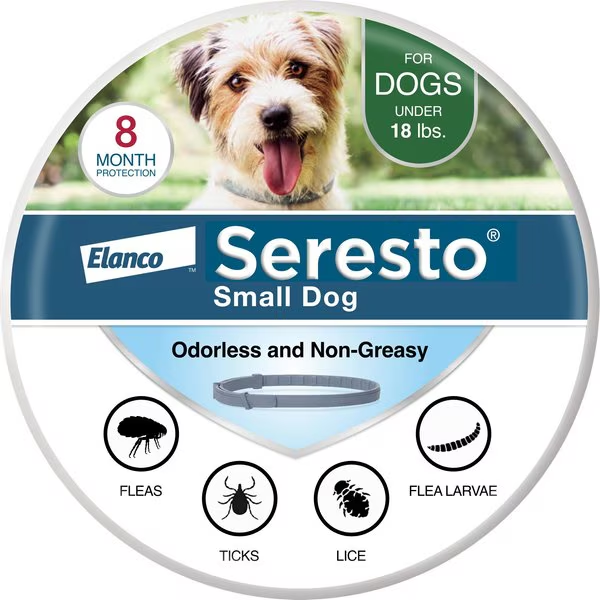
    Your veterinarian may have several suggestions for effective flea prevention that you may want to consider using. If you don’t have a veterinarian you use regularly, you may want to consider ordering a Seresto collar. These collars provide eight months of flea and tick prevention, without a prescription.

    Seresto Collars are available in three sizes on Chewy, and they will be shipped directly to your home.

    Product Available on Chewy

    You also need to treat your home. 

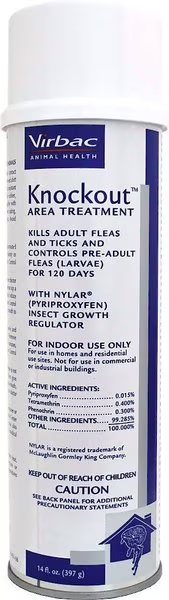
    Though the best way to do this is by hiring a professional, you can also treat your home and yard yourself. You may need to treat your home or use a spray regularly until you have eliminated all the life stages of the flea.

    Chewy has many house treatments, like this area treatment, and bombs to help you get your home flea-free as quickly as possible.

    Product available on Chewy

    However, you can’t just do it once and be done! 

    Follow-up is so essential. You will need to perform thorough cleaning throughout the treatments, including vacuuming well and washing bedding frequently. You may need to treat your home regularly, and it’s essential to ensure that your pets are on effective flea and tick prevention for several months.

    Photo Courtesy of Canva

    How can you prevent fleas?

    Since it can be quite complicated to get rid of fleas, it is much better to take preventive measures to avoid them. No matter where you live, you should keep your pets on a good preventative (like Seresto collars) all year round. Though many people stop in the fall, they are usually worse during this time, as they prepare for winter. Fleas are desperate to find a good home that is warm (like your dog or cat) and will latch on so that he or she can make it through the winter.

    ***

    Please note, this article contains affiliate links, where I will receive compensation if you buy the product, without any extra cost to you.

    ***

    You should also note that the information provided is for educational and informational purposes only. Although I am a veterinary professional, this blog should not be used as a substitute for professional veterinary advice.

    If your pet is experiencing a medical problem or concern, please contact a veterinary health professional immediately. 

  • Dangers In Your Medicine Cabinet For Your Pets

    Photo Courtesy of Canva

    Unfortunately, we all know how curious our pets are about things that they have no business dealing with. We also know that there are times when their curiosity gets the better of them.

    One of the most dangerous areas for pets is our medicine cabinet. Many items in there should be off-limits for your pets.

    Here are some human medications that your pet should avoid.

    • Most pain medications, including Tylenol, Excedrin, Advil, Aleve, Motrin, and Naproxen
    • Antidepressants
    • Medications for ADD and ADHD
    • Medications to help you sleep, such as Ambien and Lunesta
    • Blood pressure medications

    If your pet has ingested any medications from your cabinet, you need to seek medical help right away.

    This is another product in your bathroom that your pet should be kept away from.

    Xylitol. 

    This deadly product can be found in toothpaste, deodorant, makeup, and even hair products. It is even found in encapsulated medications and vitamins.

    So, what can you do to keep your pets safe from these medications?

    Ensure that your medicine cabinet is out of reach of your pets. 

    Not only that, it needs to be secure, so that a curious cat can’t open it.

    You also need to put medications away when you are done using them. 

    You should never leave medications on the table, where one of your pets could knock them off and ingest them. If the lid isn’t tight, he or she would be able to eat some of your medication.

    If you accidentally drop a pill or two, make sure that you pick it up right away. 

    You don’t want to give your pets an opportunity to get hold of your medications.

    Don’t forget about your purse. 

    Many people leave medications in their purses and then leave them lying around, allowing unsuspecting pets to access them. The best thing that you can do is keep your purse off the floor and out of reach of your pets.

    Photo Courtesy of Canva

    You should also ensure that all medication bottles are closed tightly. Gum and mints containing xylitol may be in your purse, as well as chocolate and other dangerous things.

    It is also important that you never give your pet any human medications. 

    Many emergencies occur because someone attempts to give their pet Tylenol or another pain medication to help them feel more comfortable. These medications may be toxic to your pet, so it is essential only to administer medicines that are prescribed for your pet.

    What can you do if your pet got into something he or she shouldn’t have?

    No matter how careful you may be, accidents do happen. Your purse may fall off the table and, before you know it, your dog has gotten into your pain medication.

    If this happens, please don’t hesitate to contact your veterinarian or the nearest emergency veterinary clinic. Be sure that you have the label of whatever they ate. Your veterinarian may need to know the ingredients in order to determine the next course of action.

    You should keep the ASPCA Poison Control Center number handy, as your veterinarian may ask you to call them for more information. You can reach them at (888) 426–4435. There is a consultation fee, but these people are very knowledgeable about the things that your pet can get into.

    Photo Courtesy of Canva

    You may be lucky, and whatever your pet got a hold of won’t cause any damage. However, you may need to help your dog vomit up the offensive treat. There are also times when pets need to be connected to fluids to help flush out toxins. Your veterinarian (or the Poison Control Center) can be very helpful in determining the next steps.

    ***

    Please note that the information provided is for educational and informational purposes only. Although I am a veterinary professional, this blog should not be used as a substitute for professional veterinary advice.

    If your pet is experiencing a medical problem or concern, please contact a veterinary health professional immediately. 

  • Heatstroke in Dogs: It Can Be Serious!

    Photo Courtesy of Canva

    Just like with people, dogs can struggle with the heat. They can overheat and get heatstroke, which can be deadly to them! For this reason, you need to understand what heatstroke is and how you can prevent it. You also need to know the signs that you should look for, as well as what you can do if your dog overheats or you find yourself dealing with a dog with heatstroke.

    So, what is heatstroke?

    Heatstroke is a condition that dogs get when they are outside in the heat and their bodies can’t find a way to cool off. Though they may sweat a little through their paws, there are times when panting isn’t enough to cool them down!

    Once a dog’s body temperature is one hundred and five degrees (or higher), they start to suffer from heatstroke. This can damage their organs and make them sick. Their organs may start to shut down, and it can be fatal!

    What are the signs of heatstroke?

    I recently wrote an article about overheating in dogs. If you haven’t had a chance to read it, you can check it out here.

    Basically, here are the signs that you need to keep an eye out for.

    • Heavy panting, which can turn into heavy breathing
    • Drooling
    • Increased heart rate
    • Vomiting and diarrhea (with or without blood)
    • Disorientation
    • Lethargy
    • Weakness
    • Seizures
    • Death
    Photo Courtesy of Canva

    What are some causes of heatstroke?

    The simple truth is that there are certain characteristics which make certain dogs more likely to suffer from heatstroke. This can be:

    • Age. Younger puppies and older dogs struggle more with the heat than adult dogs.
    • Breed. Certain breeds are more likely to suffer from heatstroke. This includes breeds with thick fur, as well as dogs that struggle to breathe on a regular day due to their flat face.
    • Being overweight. Overweight dogs are going to struggle with the heat more than dogs that are at a healthy weight.
    • Medical conditions. Certain medical conditions, such as heart disease and laryngeal paralysis can make it harder for dogs to deal with the heat.

    That being said, any dog can suffer from heatstroke for the following reasons:

    • Not having enough water. Dogs can get overheated if they don’t have enough water to stay hydrated during hot summer days.
    • Spending too much time in the hot sun. Just like us, dogs need time out of the direct sunlight, whether they hang out in the shade or they spend time indoors in the air conditioning.
    • Exercising during the hottest part of the day. You may need to stop taking long walks with your dog when the temperature is too hot.
    • Leaving a dog in the hot car. Too many dogs get left in a hot car and suffer from overheating due to it!
    Photo Courtesy of Canva

    What is the difference between heat exhaustion and heatstroke?

    When a dog first becomes overheated, heat exhaustion can set in. Dogs can be lethargic and weak. They may have vomiting and diarrhea. Their body temperature may be normal at this stage of overheating.

    However, if left untreated, it can turn into heatstroke. When this happens, your dog’s body temperature can rise. His or her body organs may start to shut down, and your dog may become unconscious and die.

    How does your veterinarian diagnose heatstroke?

    Heatstroke is often diagnosed by taking a dog’s temperature and observing the clinical signs. Your veterinarian will do a physical examination to make sure that your dog is doing alright.

    Your veterinarian may also request blood work in order to see how your pet’s organs are doing. You want to make sure that the organs haven’t been damaged due to heatstroke.

    What is the treatment for heatstroke?

    The first thing that needs to be done is to get your dog’s temperature down. 

    This means getting him or her out of the hot sun. You may want to take him or her in the air conditioning. If you don’t have air conditioning, you may want to use a fan to help him or her cool down.

    Spraying or wetting your dog may help to cool him or her off. 

    You are going to want to use cool water (not cold) in order to help him or her cool down.

    Make sure that you seek veterinary care. 

    Once your veterinarian diagnoses your dog with heatstroke, he or she will come up with a plan to help. He or she may recommend hospitalization, fluids, and medications, depending on your dog’s condition.

    Photo Courtesy of Canva

    Heatstroke can be a fatal disease that your dog can get from being outside in the hot sun for too long! Because of this, you need to be careful with your dog (and yourself). Make sure that you and your dog have a way to get out of the hot sun and, during the hottest part of the day, you may want to stay inside in the air conditioning.

    If your dog is showing signs of heat exhaustion or heatstroke, you need to get him or her cooled down. You should look for lethargy, vomiting, diarrhea, and even disorientation. However, you don’t want to cool him or her off too quickly! Make sure that you seek veterinary care so that your dog has the best chance of living a long and healthy life.

    ***

    Please note that the information provided is for educational and informational purposes only. Although I am a veterinary professional, this blog should not be used as a substitute for professional veterinary advice.

    If your pet is experiencing a medical problem or concern, please contact a veterinary health professional immediately. 

  • Why Dogs Eat Poop

    Photo Courtesy of Canva

    The simple truth is that dogs are known for eating many things, even if it isn’t good for them. Many eat the garbage and things outside that may give them a stomachache. Some dogs eat socks and other objects that don’t even look for smell like food. Then, there are the ones who eat their own poop (or everyone else’s)!

    Why do dogs eat poop?

    Dogs often eat poop, and it can be quite disgusting for most pet owners. They may eat their own, raid the cat’s litter box, or even eat poop from the wildlife outside.

    They can do this for many reasons, which include:

    • Normal puppy behavior. Eating poop can be a natural behavior in puppies.
    • Boredom. They can also do it because they are bored. Under stimulated puppies and dogs may play with their stool because they don’t have any toys that they want to play with.
    • Mimicking others. Your dog may also see other dogs doing it and feel the need to do the same.
    • Deficiencies in the diet. If your dog isn’t eating a normal, balanced diet, he or she may try to get what is lacking from the stool. He or she may also have an enzyme deficiency.
    • Poorly digestible diet. There are times when your dog is unable to digest the diet he or she is being fed, which can lead to deficiencies in the diet.
    • Intestinal parasites. If your dog has parasites, he or she may not be getting the nutrition that is needed.
    • Hunger. Some dogs are just hungry and will eat anything!

    Why is it bad for dogs to eat poop?

    Coprophagia, the term for eating poop, can put your dog at risk for internal parasites. If they eat the poop that has parasites in it, like the wildlife that goes through your backyard, they are likely to get the same parasite.

    It can also make your dog’s breath smell terrible. If you don’t do anything about your dog’s problem, it can even cause nutritional deficiencies.

    What can you do to stop your dog from eating poop?

    Though you may want to panic, you don’t have to. You are going to want to make sure that your dog is healthy and doesn’t have intestinal parasites. You can do this by taking your dog to the veterinarian for his or her annual checkup. At that point, you may want to deworm your pet, just in case he or she does have worms.

    If he or she continues the behavior, you may want to do something about it. You could try to do any (or all) of the following:

    Look into supplements for poop eating. 

    These supplements are made to change the flavor of the poop so that your dog is less likely to eat it.

    There are many different products available, such as this one from Amazon.

    A meat tenderizer is something you may have at home that can achieve the same result.

    You may also want to use a basket muzzle, especially when your dog is outside. 

    A basket muzzle will not hurt your dog. Instead, it will just keep him or her from eating things in the yard, such as poop, mulch, and other goodies that they feel like they just have to eat!

    There are many different basket muzzles on the market. This is one such muzzle that you may want to try.

    Product Available on Amazon

    Pick up the poop right away. 

    If you don’t want your dog to eat his or her own poop, you need to pick it up right away. This won’t give your dog a chance to go after it!

    Give your dog a better environment. 

    If your dog is eating poop out of boredom, you may want to look into enriching his or her environment. You may want to buy him or her some toys for entertainment. If he or she eats too fast, you may want to buy balls that you can put food in, so your dog has to work for his or her food.

    Photo Courtesy of Canva

    When your dog eats poop, it can be really disgusting. However, there are some things that you can do about it. You first need to make sure that your dog is healthy and there is no medical reason why he or she is eating stool. Then, you may want to pick it up right away to take the opportunity away from him or her. You may also need to get a basket muzzle and some toys so that your dog isn’t eating it out of boredom!

    ***

    Please note, this article contains affiliate links, where I will receive compensation if you buy the product, without any extra cost to you.

    ***

    You should also note that the information provided is for educational and informational purposes only. Although I am a veterinary professional, this blog should not be used as a substitute for professional veterinary advice. 

    If your pet is experiencing a medical problem or concern, please contact a veterinary health professional immediately.