Category: Veterinary Care

  • What Can You Do If Your Pet Overheats?

    Photo Courtesy of Canva

    I recently wrote an article about keeping your pets cool in the hot summer sun. If you haven’t had a chance to read it, you can check it out right here.

    Just like us, we have to worry about our pets overheating. They aren’t able to cool off as easily as us, which makes it even more common for them to suffer from heatstroke.

    So, how can you figure out that your dog is overheating?

    One of the first things you may notice with a overheating dog is that they pant excessively. 

    So, what is excessive panting? If your dog is breathing as he or she does after exercise, just walking around the block, you may need to worry that your dog is getting too hot.

    Dogs that are hot may also drool more than usual. 

    Though many breeds drool more than others, the truth is that when a dog starts to overheat, he or she may drool more than normal. Excessive drooling helps a dog cool off more efficiently than panting.

    You may even notice that your dog’s heart rate is faster than usual. 

    This means that your dog’s heart is pumping more than normal, to keep his or her blood moving away from his or her vital organs. You may even notice that your dog’s heart rate is irregular, as it struggles to cool off.

    Then, your dog may start breathing really rapidly. 

    This is a sign that your dog can’t get enough oxygen to help him or her cool off from overheating.

    Your dog may also become quite lethargic. 

    He or she may stop moving so that your dog can cool down.

    He or she may even have trouble walking around and may seem disoriented. 

    As the body struggles to get enough oxygen, you may notice that your dog stumbles around when trying to walk. Many don’t really know where they are and may wander around and run into things.

    Vomiting and diarrhea are quite common with severe dehydration. 

    You may even notice blood in the vomit or diarrhea.

    If this continues, your dog may eventually collapse and show other neurologic signs. 

    Seizures can be common as your dog tries to cool off from being overheated.

    Photo Courtesy of Canva

    What can you do if your dog or cat is overheating?

    You need to get your dog out of the hot sun. 

    If you are able, get your dog into the air conditioning. If not, at least get him or her into the shade. If you are home, but you don’t have air conditioning, you may want to put him or her in front of a fan.

    Wet your dog down with cool water. 

    Though you want to cool your dog down, you can’t use cold water because it can be just as dangerous to cool him down too fast.

    Keep an eye on his or her temperature. 

    Once your dog’s temperature is at one hundred and three degrees, you can stop trying to cool him or her down with water. You can even take the fan off of him or her.

    Make sure that he or she gets something to drink. 

    Dehydration is very serious, so make sure that as soon as your dog is able, you give him or her cool water. You don’t want to use water that is too cold. Some people put ice in their pet’s water, but that isn’t a good idea when they are that overheated.

    Seek veterinary care. 

    Overheating and heatstroke can be life-threatening, so it is a good idea to get your dog checked out by the veterinarian. He or she may need some extra care to ensure that everything is going to be alright.

    Photo Courtesy of Canva

    Just like people, dogs can overheat and find themselves in serious trouble. They can suffer from heatstroke, and this can be fatal. For this reason, you really need to keep an eye on your dog when he or she is outside in this heat.

    If you notice that your dog is panting and struggling in the heat, you need to find a way to cool him or her down. Just remember that you can’t do it too fast. Get him or her inside with the air conditioning or a fan. Wet him or her down with cool water to work on getting your dog cooled off. Then, you should always get him or her checked out by the veterinarian to make sure that everything is fine.

    ***

    Please note that the information provided is for educational and informational purposes only. Although I am a veterinary professional, this blog should not be used as a substitute for professional veterinary advice.

    If your pet is experiencing a medical problem or concern, please contact a veterinary health professional immediately. 

  • Why Does My Dog Need to Be on Heartworm and Flea/Tick Medications All Year Round

    Photo Courtesy of Canva

    One of the most common questions that I get asked as a veterinary technician is why we recommend that their dogs be on heartworm and flea/tick medications all year-round. Everyone sees the cost of the medications and wants to try to save money. Others don’t want to give their dogs anything more than they need.

    However, skipping these medications can be a mistake. Here are some reasons why you should keep your dog on heartworm and flea/tick medications all the time.

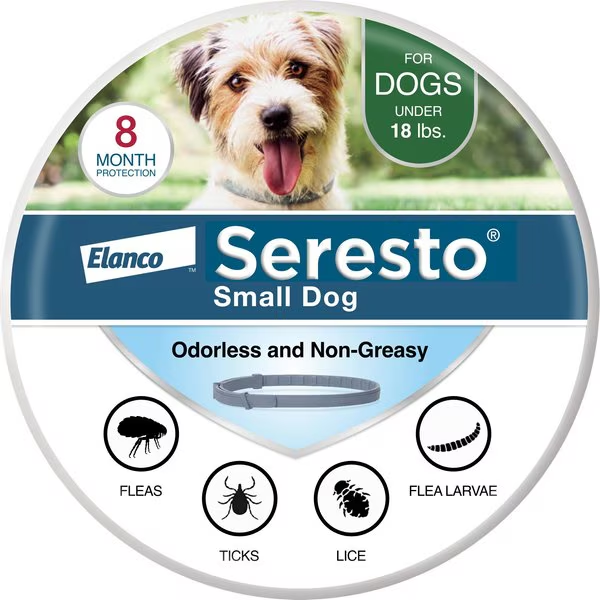
    Fleas can be a problem, no matter what the season is. 

    Though many people think that fleas go away in the fall and winter, the truth is that the fall is usually when they are at their worst. They are doing everything they can to find a warm place to survive the winter, and we see fleas regularly during the fall and winter months.

    Even worse, many dogs and cats have a severe allergy to fleas. Even one flea can set off a reaction that leaves them absolutely miserable! They itch, scratch, and bite themselves all day long, even after the flea has jumped off!

    Ticks can also be a problem all year round. 

    Ticks can live outside until the ground freezes. This means that they are also looking for somewhere safe to live. They hide in tall grass and bushes, attaching to any dog (or person) that walks by.

    Photo Courtesy of Canva

    Even worse, if your dog has a tick attached for more than thirty-six hours, he or she may get a disease transmitted by the tick. Most people think of Lyme disease, but there are many others out there. These diseases can become crippling if not caught early.

    If you take your dog off heartworm medication, you must test him or her every year before starting back up on it. 

    This will ensure that your dog doesn’t get the disease in the few months that he or she wasn’t on the preventative. If you give a heartworm-positive dog heartworm preventative, the results can be deadly!

    Heartworm disease can kill your dog. 

    If your dog gets heartworm disease, it means that he or she has worms that live in the heart. These worms can cause a lot of damage to your dog’s heart and lungs.

    Even worse, the treatment can be fatal. Though you need to kill off the worms in your dog’s heart, you can’t do it too fast. If too many worms die quickly, it can be deadly for your dog. This is another reason why you can’t give preventative to dogs who have heartworms!

    Most heartworm preventatives also protect your pet (and your family) from intestinal parasites. 

    Your pet probably comes into contact with many intestinal parasites during his or her lifetime. These include tapeworms, hookworms, roundworms, and others.

    Photo Courtesy of Canva

    Worms can cause diarrhea and vomiting in your pet. You may also notice weight loss. If you give your pet preventative, it will help keep him or her parasite-free!

    And though you think that preventative care is expensive, the truth is that it is much more costly to treat! 

    If your pet gets heartworms, you will be dealing with multiple treatments, which can be fatal to your pet.

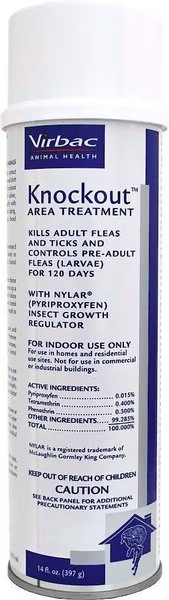
    If your pet brings in fleas, you may have to treat every one of your pets in the household, along with the house. Even worse, it can take up to three months to eradicate fleas once they get inside your home!

    Then, your pet may be facing tick-borne diseases. He or she may need to be on antibiotics for a month or longer. And once your pet gets Lyme or another disease spread by ticks, he or she is more likely to get it again. You can also get them.

    Photo Courtesy of Canva

    Though you may not want to spend the money (or give your dog more medication than he or she needs), the truth is that it is better to give preventatives all year long! With the weather changes, we see fleas and ticks all year. They are really bad in the fall as they start to look for warm places to live. Even better, these preventatives will take care of any intestinal parasites that your pet may have, which will help to keep your family healthy!

    ***

    Please note that the information provided is for educational and informational purposes only. Although I am a veterinary professional, this blog should not be used as a substitute for professional veterinary advice. 

    If your pet is experiencing a medical problem or concern, please contact a veterinary health professional immediately. 

  • Why Do Indoor Cats REALLY Need to Be Vaccinated For Rabies?

    Photo Courtesy of Canva

    Rabies is a disease that is highly contagious to all mammals. Humans are also susceptible to the disease. Even worse, it is almost one hundred percent fatal, once clinical signs develop.

    Luckily, it is entirely preventable with a simple vaccine you give your cats and dogs. Though you may only think that your dogs and outdoor cats need the vaccine, the truth is that you should vaccinate all of your pets.

    Here are some reasons why you REALLY should vaccinate your indoor cats for Rabies

    It is a deadly disease that is preventable, with a simple vaccine. 

    Why would you want to put your family in danger if all it takes is a vaccine to prevent it? It is much better than losing your family pet or even a family member due to the horrific disease.

    Because it can be deadly, most states require all pets to have a rabies vaccine. 

    It is the law that you need to vaccinate your pet against the disease, even if he or she never goes outside.

    There is no testing for the disease, until it is too late. 

    The only way to test for rabies is by examining the tissue of the brain. This can only be done after the patient has passed away or been euthanized. It can take a few days to get results. In the meantime, other affected humans may have to go through preventive measures to ensure they are safe.

    Though you may think that your cat can’t get exposed to Rabies, the truth is that bats and other wildlife can carry the disease. 

    These can get in the house more often than you think, which makes it dangerous to have a cat that isn’t vaccinated against the disease.

    Want to go even further when it comes to protecting your pet? Here are some things that you can do to keep your pets safe from rabies (and other preventable diseases)!

    Photo Courtesy of Canva

    Vaccinate all of your dogs and cats against diseases that they can come in contact with. 

    This includes more than the Rabies vaccine. You should vaccinate dogs for Distemper, Kennel Cough (if they are around a lot of other dogs), Lyme, and Lepto. Cats should be vaccinated against Distemper and Feline Leukemia.

    You also need to keep track of when the vaccines are due. 

    You should do your best to overlap vaccines, so that you don’t let time lag between when the vaccines are due and when you give them.

    Keep cats indoors. 

    Indoor cats live healthier and happier lives. You don’t have to worry about them getting hit by cars, being attacked, or who knows what else can happen when cats roam outside.

    You may want to keep your dogs indoors as much as possible. 

    Dogs deserve to be safe too, so they shouldn’t spend time running around on their own.

    Make sure that rodent and wildlife control is important to you. 

    You may want to work with a pest control company to keep creatures from getting into your home. You should have a cap on top of your chimney and screens on all of your windows.

    Do your best to keep wildlife off your property. 

    Don’t feed stray cats, or you may soon find your yard full of wildlife that you didn’t plan on having!

    If a human or pet is ever bitten, they should wash it right away and seek medical care if needed. 

    If the medical provider is worried about rabies, it is important to contact the health department. Rabies shouldn’t be something that you ignore. You have to act fast!

    Photo Courtesy of Canva

    Though you may not want to vaccinate all of your pets against rabies, the truth is that you should. It is for everyone in your family’s protection. You don’t want to lose a family pet (or even someone in your family) because you weren’t careful!

    All it takes is a bat or other wildlife to get into your home, and rabies is possible. That being said, you can’t test for the disease without euthanasia, so you would have to put your pet down to figure out whether or not your whole family needs to be treated preventively!

    Besides vaccines, you also should keep your pets inside as much as possible, so that they are safe. You also need to work hard to keep pests and other wildlife out of your home!

    ***

    Please note that the information provided is for educational and informational purposes only. Although I am a veterinary professional, this blog should not be used as a substitute for professional veterinary advice. 

    If your pet is experiencing a medical problem or concern, please contact a veterinary health professional immediately. 

  • Why Your Pet Needs Annual Examinations

    Photo Courtesy of Canva

    When you receive the card in the mail indicating that your pet is due for vaccines and an annual examination, you may wonder if this is really necessary. Your dog or cat may be very healthy, and you may not see the need to schedule an appointment to take them to the veterinarian. That being said, it is crucial to take your pet to the veterinarian when they are due for an annual examination.

    Here are some reasons why your pet needs to have an annual examination.

    It helps to develop a relationship with your veterinarian.

    Both you and your pet will have the opportunity to meet a veterinarian and her team, allowing you to feel comfortable asking questions when you need help.

    You will also know who to call in the event of an emergency.

    If you get home and find that your dog has been vomiting all over your home, you will know who to call. Even if they aren’t able to squeeze you in (or they aren’t open), they should have a phone number of a local emergency veterinarian that they trust.

    Your veterinarian will be able to establish what is normal (and what isn’t normal with your pet).

    Whether you decide to do blood work or not, your veterinarian will learn more about your pet during an examination. He or she will learn what is normal for your pet and what isn’t.

    This will help your veterinarian catch something early.

    Your veterinarian will conduct a thorough examination to determine if your pet is experiencing any health issues. They may be able to identify something early, such as a mass or an abnormality in the blood work. At this point, it may be easier to treat (and more likely to be successful). It will also cost less money!

    When your pet comes in for its annual examination, it will ensure that it receives the necessary vaccines.

    This is important to protect both your pet and your family. You shouldn’t let your pet’s vaccines get overdue.

    You will also know that you are doing everything necessary to keep your pet healthy.

    Your veterinarian and his or her team will be able to talk to you about their recommendations, including the best food, as well as what flea and tick prevention and heartworm prevention that you should be using.

    The annual examination also gives you a chance to talk to your veterinarian about the things that are bothering you.

    You can talk about his or her weight, any nutrition questions that you may have, as well as any health concerns that you are worried about.

    That being said, senior pets should really have an examination every six months. Here are some reasons why.

    Photo Courtesy of Canva

    Senior pets age much quicker than their younger counterparts.

    They seem to get health problems that go downhill quickly. This can include arthritis and trouble getting around, as well as kidney disease, heart failure, liver disease, and much more.

    By having an examination every six months, you can help your senior pet stay as healthy as possible.

    Your veterinarian will continue to look for potential problems, aiming to catch them early. By doing this, you are helping your senior pet have the best life possible.

    So, what does your veterinarian look for in an examination?

    Your veterinarian will examine your pet from head to tail, and everything in between.

    He or she will look at your pet’s eyes and ears to make sure that they are free of infection.

    Any swelling and redness will be examined to ensure your pet is comfortable again.

    Your veterinarian will listen to your pet’s heart and lungs.

    At this time, please let them know if your pet has been coughing, sneezing, or is having trouble breathing.

    He or she will do a thorough examination of your pet’s skin.

    Your veterinarian will examine your pet for any patches of hair loss and shedding. He or she will look for itchiness and a change in color, which may occur if your pet digs at its skin.

    Your veterinarian will feel your pet’s abdomen.

    He or she will feel for the kidneys, liver, and even for any masses that may be in your pet’s abdomen.

    Your veterinarian will also look at the health of your pet’s mouth.

    Dental disease is a significant problem in both dogs and cats, as many owners are unable to brush their pets’ teeth.

    Photo Courtesy of Canva

    If you have an older dog, you may want to have blood work done to check its values. Here are some reasons why you should consider this.

    You will be able to figure out baseline values for your pet.

    If he or she ever did have problems, you would know what his or her normal values were.

    You can catch problems early.

    You may be able to detect kidney disease in its early stages, allowing you to treat it and slow down the progression of the disease.

    You may even need to have blood work done to ensure that your pet can safely take a certain medication.

    Your veterinarian may request blood work, as some medications can be harsh on your pet’s kidneys and liver. He or she will want to ensure that your pet is healthy enough to take it, then recheck it to confirm that it isn’t causing any harm to them.

    You are also going to want to make sure that your pet is able to go under anesthesia before you put him or her through it.

    Since anesthesia will put a strain on your pet, you are going to want to make sure that he or she doesn’t have any underlying issues preventing you from doing so.

    Although you may not want to take your pet to the veterinarian every year (or even every six months), it is really important. You will want to have someone you trust when you really need them. It also helps to catch things early, which gives you the best chance at fixing the problem (or at least slowing it down).

    ***

    Please note that the information provided is for educational and informational purposes only. Although I am a veterinary professional, this blog should not be used as a substitute for professional veterinary advice. 

    If your pet is experiencing a medical problem or concern, please contact a veterinary health professional immediately.