Tag: dog care

  • 5 Common Dog Care Mistakes (and How to Avoid Them)

    Photo courtesy of Canva

    Owning a dog is one of the most rewarding experiences in the world — unconditional love, endless tail wags, and plenty of laughs. 🐾 But even the most devoted dog owners can make mistakes without realizing it.

    As a certified veterinary technician with over 20 years of experience in small animal care, I’ve seen firsthand how small oversights can lead to big problems down the road. The good news? Most of them are easy to fix once you know what to look for!

    Here are the five most common dog care mistakes — and my simple vet tech tips to help you avoid them.

    🦴 Skipping Regular Vet Visits

    We all know vet visits can be stressful (and expensive), but skipping them can cause bigger issues later. Dogs are experts at hiding pain and illness, and by the time symptoms are obvious, the problem may already be advanced.

    Vet Tech Tip:
    Schedule a wellness exam at least once a year, even if your dog seems healthy. Your vet can check teeth, weight, skin, and internal organs before small issues become big ones. And don’t forget heartworm and flea prevention year-round!

    🐾 Overfeeding (or Feeding the Wrong Food)

    “I just can’t say no to those eyes.” Sound familiar? 😉 Unfortunately, overfeeding is one of the leading causes of obesity in dogs — which can shorten their lifespan and lead to joint, heart, and metabolic issues.

    Vet Tech Tip:
    Check the feeding guidelines on your dog’s food, and measure portions with a scoop instead of guessing. Choose a high-quality, age-appropriate food that fits your dog’s breed and activity level.

    🐕 Not Providing Enough Exercise or Mental Stimulation

    Even the calmest dogs need more than just a quick potty break! Bored dogs often develop behavioral issues like chewing, barking, or digging.

    Vet Tech Tip:
    Most dogs need at least 30–60 minutes of physical activity daily, along with play or training to challenge their minds.

    🛒 Try interactive toys like:

    Product Available on Amazon

    Mix up walks, games, and training sessions to keep things fun for both of you.

    🧼 Ignoring Dental Care

    Dental health is one of the most overlooked parts of dog care — and one of the most important. Plaque buildup can lead to painful infections and even affect the heart and kidneys.

    Vet Tech Tip:
    Brush your dog’s teeth several times a week using dog-safe toothpaste (never human). Dental chews and water additives can help, but they don’t replace brushing.

    🛒 Recommended: Virbac CET Enzymatic Dog Toothpaste

    Product Available on Amazon

    If your dog’s breath smells bad or you see yellow buildup, schedule a professional dental cleaning.

    🛏️ Forgetting About Grooming and Nail Trims

    Even short-haired dogs need regular grooming! Brushing helps remove loose fur, keeps skin healthy, and reduces shedding. Neglecting nails can cause discomfort and affect how your dog walks.

    Vet Tech Tip:
    Brush at least once a week and check nails every 2–3 weeks. Invest in quality grooming tools:

    And remember, grooming isn’t just about appearance — it’s an opportunity to bond and notice any skin issues early.

    🐶 Final Thoughts

    Dog ownership isn’t about being perfect — it’s about learning and doing your best. Avoiding these common mistakes will help your pup live a longer, happier, and healthier life.

    And if you ever feel unsure, your veterinary team (including your friendly neighborhood vet tech!) is always happy to help. 💙

    A little knowledge — and a lot of love — go a long way toward giving your dog the life they deserve. 🐾

    ***

    Please note, this article contains affiliate links, where I will receive compensation if you buy the product, without any extra cost to you.

    ***

    You should also note that the information provided is for educational and informational purposes only. Although I am a veterinary professional, this blog should not be used as a substitute for professional veterinary advice. 

    If your pet is experiencing a medical problem or concern, please contact a veterinary health professional immediately. 


  • Tips For Traveling With Your Dog

    Photo Courtesy of Canva

    Many people love their dogs and spend as much time with them as they can. This includes vacations. They enjoy sharing their new experiences with them. However, traveling with a dog can be a little stressful. With some careful planning, you can make your life work with pets.

    Here are some tips to make traveling with your dog.

    Make sure that your dog has a collar with identification on it.

    Your name and phone number should be on the collar so that, if your dog gets lost, you are able to get him back. You can also go a step further and get him a microchip. This ensures that your dog will be brought back to you.

    Photo Off of Amazon Website

    Amazon sells these amazing customizable collars, which will help you get your pet back, in case he or she gets away.

    Pack appropriately for your dog.

    Make sure that you bring his or her bed, bowls, and food. Many dogs enjoy their familiar toys when they are on a road trip. Anything that reminds your dog of home is good to take along.

    Don’t forget that some water can taste different, so it might be a good idea to bring some water from home to ensure that your dog gets enough to drink while you are away.

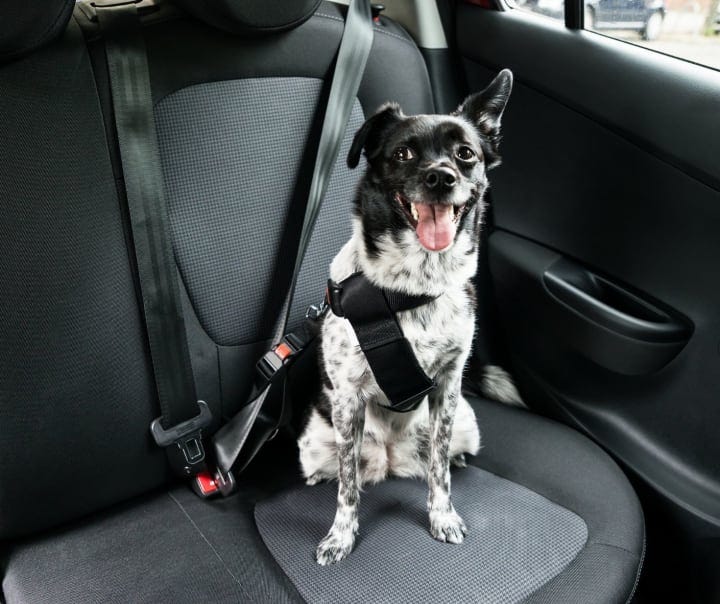
    Use carriers or seat belt restraints when traveling by car.

    Putting your dog in the back of the pickup truck is not a safe option when traveling. Many dogs jump (or fall out) and get hurt. Sometimes this causes death.

    Photo Courtesy of Canva

    Instead, put them in a carrier, so they can move around and still be safe. If you have a bigger dog, you should get a seat belt restraint. Both of these things will keep your dog safe if you are in an accident.

    Product Courtesy of Amazon

    Amazon has this great product, with two leashes that buckle into your seat belt, as well as a collapsible water bowl.

    Do a few practice car rides to see how your dog will handle a long car ride.

    Dogs can get car sick, too. They can also get anxious and really wound up in the car. Prepare for this by taking them on several short rides to see how they will react. You may have to talk to your veterinarian about getting a sedative to make the car ride a little less stressful.

    Make sure that you take a lot of breaks.

    Though many people love to rush to their destination, it is not possible with dogs. They need to take frequent bathroom breaks. Taking short walks every few hours is a good idea so that they can stretch their legs and get something to drink.

    Before you even leave for your destination (or sooner than that), make sure that your dog can stay with you at the hotel or bed and breakfast.

    Not all hotels and bed and breakfasts are dog-friendly. You need to make sure that you can find places where you can take your dog. You can’t leave him in the car overnight.

    Photo Courtesy of Canva

    Taking your dog along on vacation is a great idea, with plenty of planning. Make sure that your dog has a collar and identification. If possible, get him microchipped so, even if he gets lost, you will be able to find him. Make sure you plan ahead with where you are staying and pack appropriately. Be sure to bring his bedding, bowls, food, and water.

    Travel safely in the car with either a crate or a seat belt restraint. It might be a good idea to take a few trips around town to see how your dog reacts in the car. While on the road, be sure to take plenty of breaks and walks to keep both you and your dog limber on the long drive. With all of these tips, you should have a wonderful vacation with your furry friend.

    Product Courtesy of Amazon

    Amazon offers this all-in-one dog travel set, which is the perfect place for you to start traveling with your dog!

    ***

    Please note, this article contains affiliate links, where I will receive compensation if you buy the product, without any extra cost to you.

    ***

    It is also important to know that the information provided is for educational and informational purposes only. Although I am a veterinary professional, this blog should not be used as a substitute for professional veterinary advice. 

    If your pet is experiencing a medical problem or concern, please contact a veterinary health professional immediately.